


Consigne de faire bouillir l’eau : causes, risques et solutions. Comprenez quand et pourquoi ces recommandations sont émises et comment réagir.
Your Cart
(0 products)
Your cart is empty
Purified water is not simply a matter of taste or convenience. It is essential for many industrial and pharmaceutical uses. Imagine a world where every drop of water consumed is free from bacteria, heavy metals and organic impurities.
Thanks to advanced purification methods such as distillation, reverse osmosis and ion-exchange resins, water can reach very high levels of purity.
However, controversy sometimes arises in the food and beverage industry, as seen in the Nestlé bottled water affair. Natural mineral waters are subject to strict rules and cannot be treated in the same way as ordinary drinking water. Nestlé became the target of legal complaints after reports alleged the use of prohibited treatments on certain bottled waters.
An investigation by Radio France and Le Monde suggested that at least one third of French bottled water companies were affected by the controversy.
Major brands including Vittel, Contrex, Hépar, Perrier and St-Yorre were reportedly concerned by non-compliant treatments linked to contamination issues.
These treatment methods are normally permitted for tap water or water being made potable. However, for natural mineral water, the rules are stricter because it must come from protected underground sources and retain its natural characteristics.
Nestlé acknowledged using filtration systems involving activated carbon and ultraviolet treatment. According to reports, authorities were informed in 2021 in order to maintain food safety standards. The French Inspectorate General of Social Affairs (IGAS) was tasked with investigating.
Its findings reportedly indicated that nearly 30% of brands were subject to non-compliant treatment methods.
In December 2020, a whistleblower from the Alma group reportedly alerted French authorities. The DGCCRF then opened an investigation, which brought the issue of prohibited treatment methods into the public eye.
The French government became aware of the matter in August 2021 but appears to have handled the issue discreetly. In February 2023, an interministerial meeting was reportedly held to discuss Nestlé and bottled water production.

Although the methods used were reportedly not authorised for natural mineral water, government sources stated there was no proven health risk linked to the quality of the bottled water itself.
The main issue appears to concern labelling and regulatory classification. Purified water has undergone treatment, whereas natural mineral water and spring water must meet stricter legal definitions of natural purity.
Some disinfection methods may be permitted in limited circumstances, but they must preserve the essential natural character of the water.
Following the wider scandal, another issue emerged involving Perrier. Part of the production was reportedly destroyed as a precaution after storm Monica affected water quality near wells in south-eastern France.
Nestlé referred to a temporary microbiological deviation. Reports suggested bacteria of faecal origin may have been detected.
According to AFP reports, around two million bottles were removed from the market.
Later reports also stated that production of one-litre plastic Perrier bottles was paused due to insufficient water volumes, with sales suspended until the end of summer.
Nestlé Waters has faced multiple controversies in recent years, including suspicions of fraud and alleged illegal borehole exploitation.
In 2020, environmental groups Eau88 and France Nature Environnement filed complaints, although the case was later dropped.
The company stated that its sites were known, identified and authorised.
After repeated scandals, some consumers feel less confident about bottled mineral waters or purified waters using disputed methods. It is therefore useful to understand the different categories of water available.
| Category | Water Type | Description |
| Purified Water | Distilled Water | Water stripped of minerals and contaminants through distillation. |
| Demineralised Water | Water with minerals removed through treatment. | |
| Reverse Osmosis Water | Filtered water with impurities and many minerals removed. | |
| Natural Water | Natural Mineral Water | Water from protected underground sources with stable mineral composition. |
| Spring Water | Water from underground sources, bottled at source without fixed mineral content. | |
| Table Water | Water from mixed sources, treated to be potable and generally less tightly regulated. |

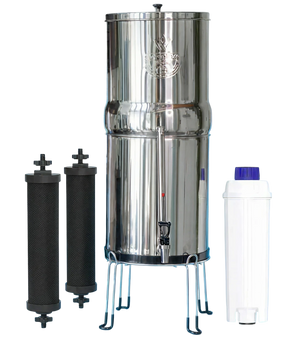
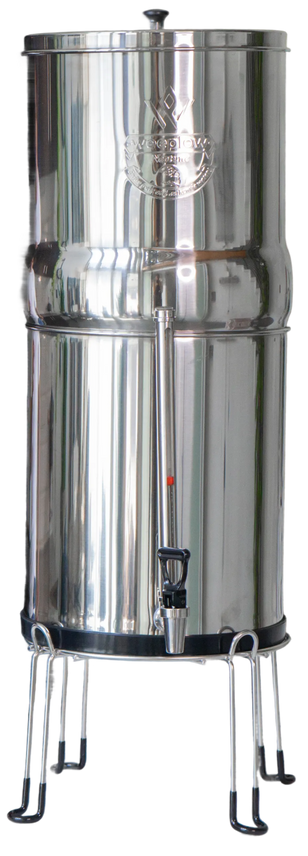
At Weeplow, we offer an innovative gravity water filtration system to help you obtain cleaner water. It can reduce bacteria, chlorine, sand, heavy metals and sediment without harmful chemical treatment, while preserving beneficial minerals.
Feel free to browse our shop to find the gravity water filtration system best suited to your needs.
Consigne de faire bouillir l’eau : causes, risques et solutions. Comprenez quand et pourquoi ces recommandations sont émises et comment réagir.
Les nitrates dans l’eau du robinet sont fréquents mais invisibles. Découvrez leur origine, les risques potentiels et les solutions pour mieux comprendre votre eau au quotidien.
Les nitrates sont difficiles à détecter sans analyse. Découvrez comment ils se retrouvent dans l’eau du robinet, pourquoi ils sont surveillés et comment tester votre eau simplement.
Les nitrates peuvent être présents naturellement dans l’eau, mais certaines activités, notamment agricoles, peuvent augmenter leur concentration. Découvrez la limite applicable en France, comment v...
Nitrat kommt natürlich in Böden, Pflanzen und Wasser vor. Erhöhte Konzentrationen können jedoch insbesondere im Grundwasser auftreten. Erfahren Sie, wie der Nitratgrenzwert in Deutschland geregelt ...