


Nitrates et méthémoglobinémie : quels risques pour l’eau du robinet ? Comprenez le lien entre ces deux éléments et ce que cela signifie pour votre eau au quotidien.
Your Cart
(0 products)
Your cart is empty
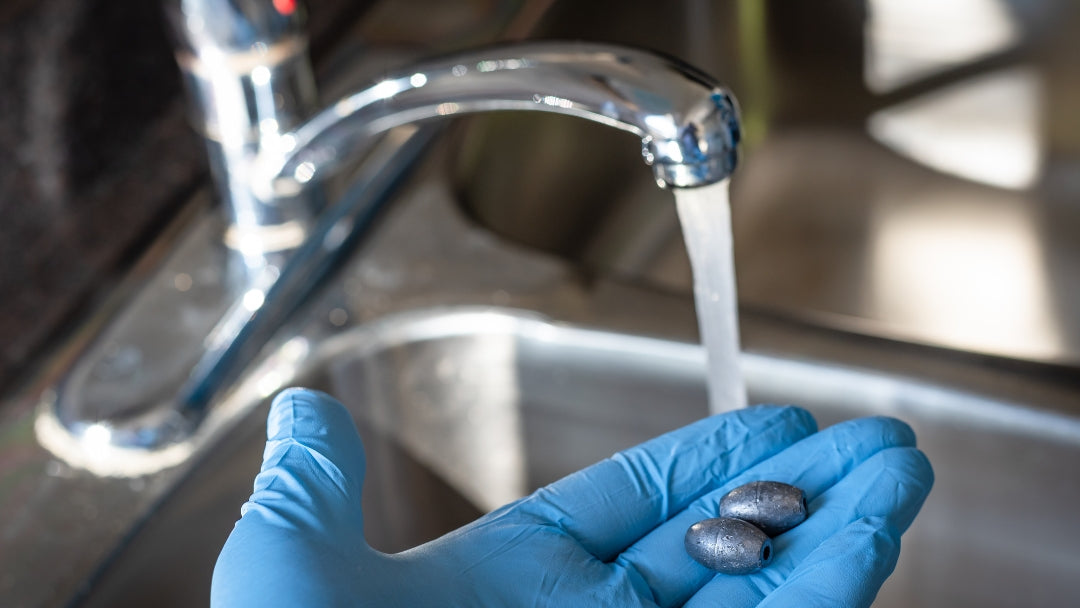
Tap water is not necessarily good for our health. Several recent news reports have revealed cases of contamination. On 19 September, an investigation carried out by Radio France and France Bleu revealed that tap water in Lille may be problematic for our health.
Indeed, banned and carcinogenic forever chemicals were found. The situation is particularly worrying and shows that alternatives are needed for drinking cleaner water.
Per- and polyfluoroalkyl substances (PFAS), known as forever chemicals, are a family of synthetic molecules with unique properties, including exceptional chemical and thermal stability. This resistance to degradation is due to the presence of carbon-fluorine bonds, among the strongest in organic chemistry. PFAS include more than 4,000 compounds, including perfluorooctanoic acid (PFOA) and perfluorooctanesulfonic acid (PFOS).
Widely used since the 1950s in many industrial sectors and everyday products, PFAS are valued for their non-stick, waterproof and heat-resistant properties. They are found in non-stick cookware coatings such as Teflon, food packaging, firefighting foams, waterproof textiles and cosmetics.
The environmental persistence of PFAS and their toxicity raise serious health concerns. Some PFAS, such as PFOA and PFOS, are classified as carcinogenic (category 2), reprotoxic (category 1B) and endocrine disruptors. They are associated with an increased risk of kidney and testicular cancers, fertility and developmental disorders, as well as harmful effects on the thyroid and liver.
| PFAS | Use | Health Impacts | Toxicity Threshold (µg/L) |
| PFOA | Non-stick coatings | Carcinogenic, affects the thyroid | 0.10 |
| PFOS | Firefighting foams | Carcinogenic, affects the liver | 0.20 |
| PFNA | Food packaging | Endocrine disruptor | 0.05 |
| PFDA | Waterproof textiles | Fertility disorders | 0.01 |
An investigation carried out by France Bleu and the Radio France investigative unit, published on Thursday 19 September 2024, revealed the presence of a significant quantity of PFAS in tap water in Lille.
In addition, PFHxS, another PFAS detected, is now banned because of its toxicity to the thyroid and fertility.
Although the levels recorded were below the French regulatory limits, set at 0.1 µg per litre of distributed water, the European Metropolis of Lille (MEL) acknowledges that two of the PFAS detected are more concerning than the others. Alain Bézirard, Vice-President of MEL in charge of water policy, stressed the need to remain vigilant and ensure there is no rise in contamination levels.
The exact source of this pollution has not yet been identified, but MEL suspects the presence of a former public landfill site. Investigations are ongoing to confirm this theory and carry out decontamination of the area.
Following publication of the results of the investigation carried out by France Bleu Nord and the Radio France investigative unit, the Regional Health Agency (ARS) and the European Metropolis of Lille (MEL) sought to reassure the public regarding tap water quality. The ARS stated that the PFAS levels detected in the Lille sample remain below the thresholds set by French and European legislation, namely 0.1 µg per litre of distributed and consumed water.
Despite these reassuring statements, it should be remembered that the presence of PFAS, even at low levels, raises concerns regarding risks to public health. Some of these compounds (PFOA and PFOS) are classified as carcinogenic or potentially carcinogenic by the International Agency for Research on Cancer (IARC).
At the same time, investigations are ongoing to identify the exact source of the pollution and introduce suitable solutions. MEL is notably considering the installation of activated carbon filters in water treatment plants, a technology effective for removing PFAS.
Awareness campaigns will also be carried out with industrial operators to encourage them to reduce PFAS discharges into the environment.
Samples taken in nearly 90 towns and cities, from Lille to Auxerre via Saint-Jean-de-Losne and Déols, highlighted the presence of these forever pollutants in 43% of the samples analysed.
This widespread contamination highlights the need for awareness and action on a national and global scale. PFAS, used for decades in many everyday products and industrial activities, have spread through the environment by contaminating soil, surface water and groundwater reserves. Their presence in tap water is only the visible part of a much wider issue.

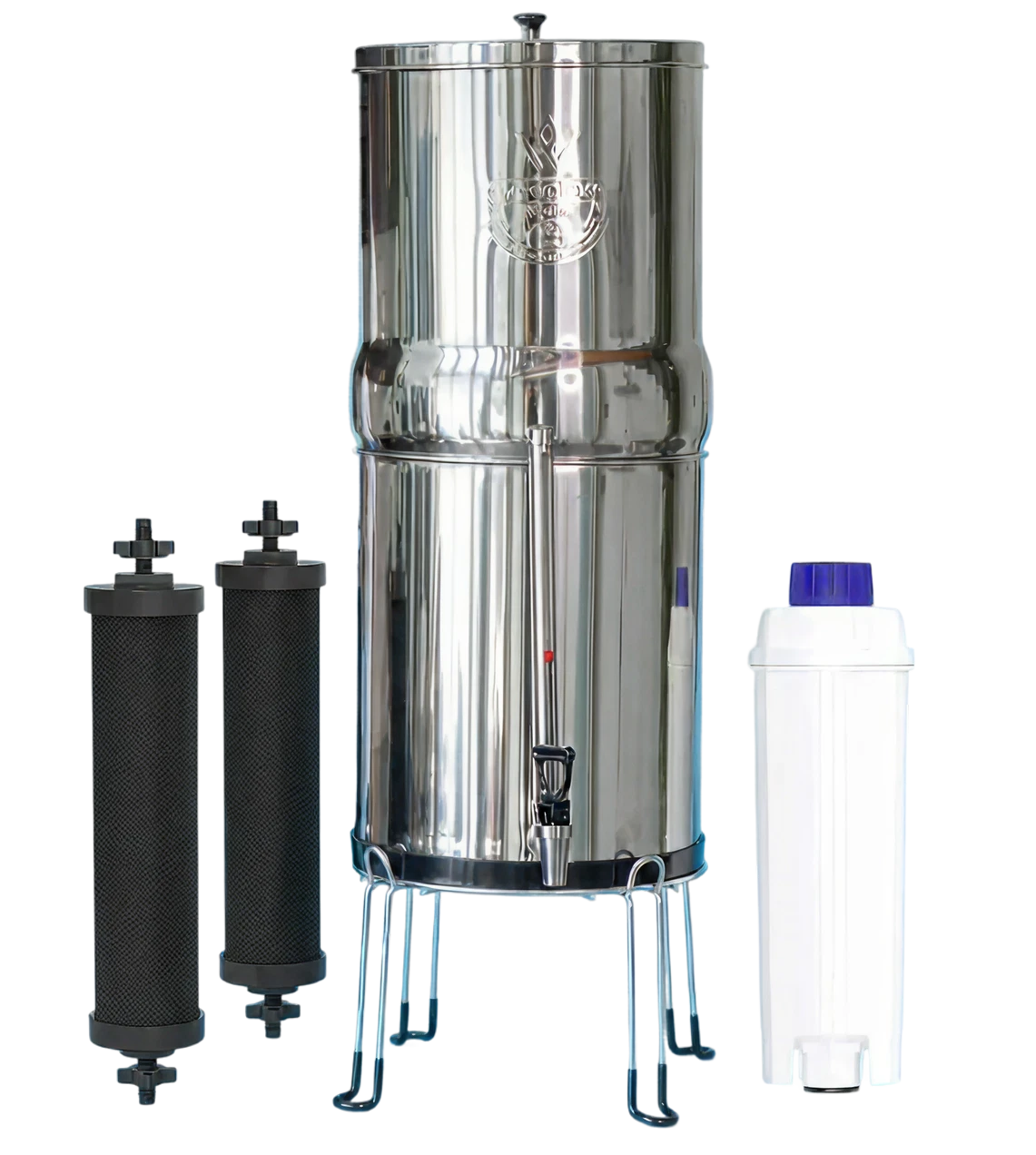
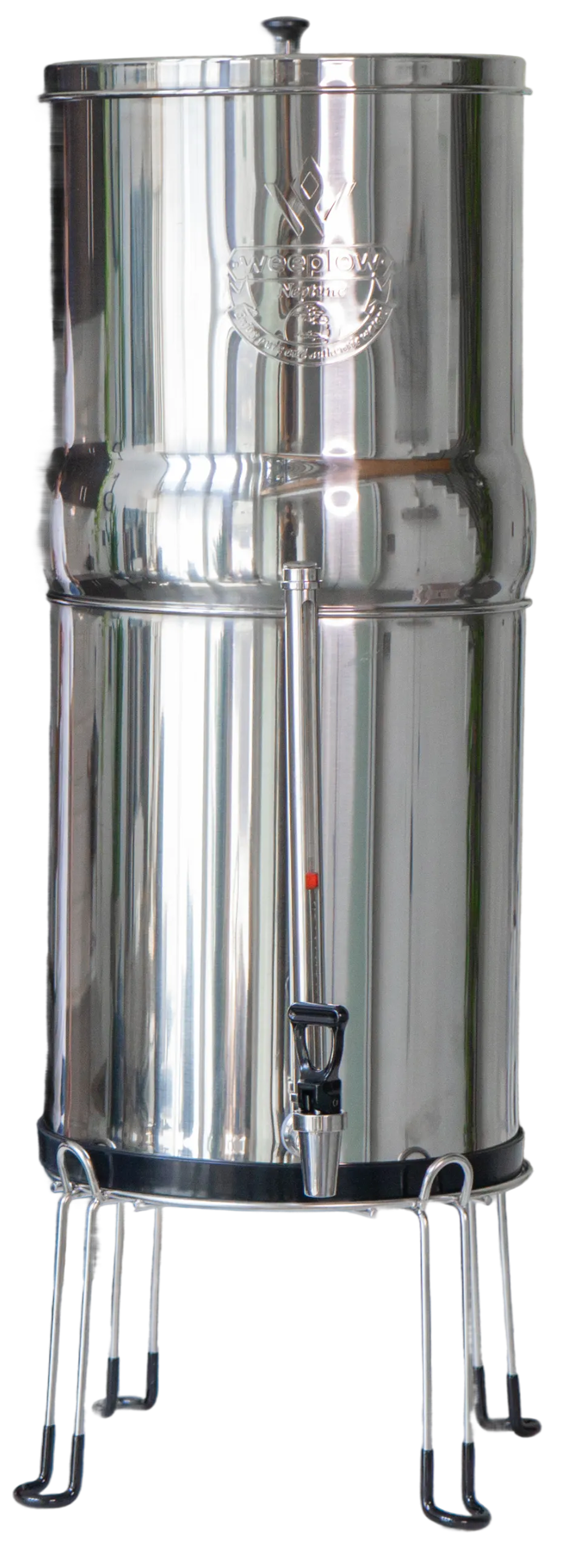
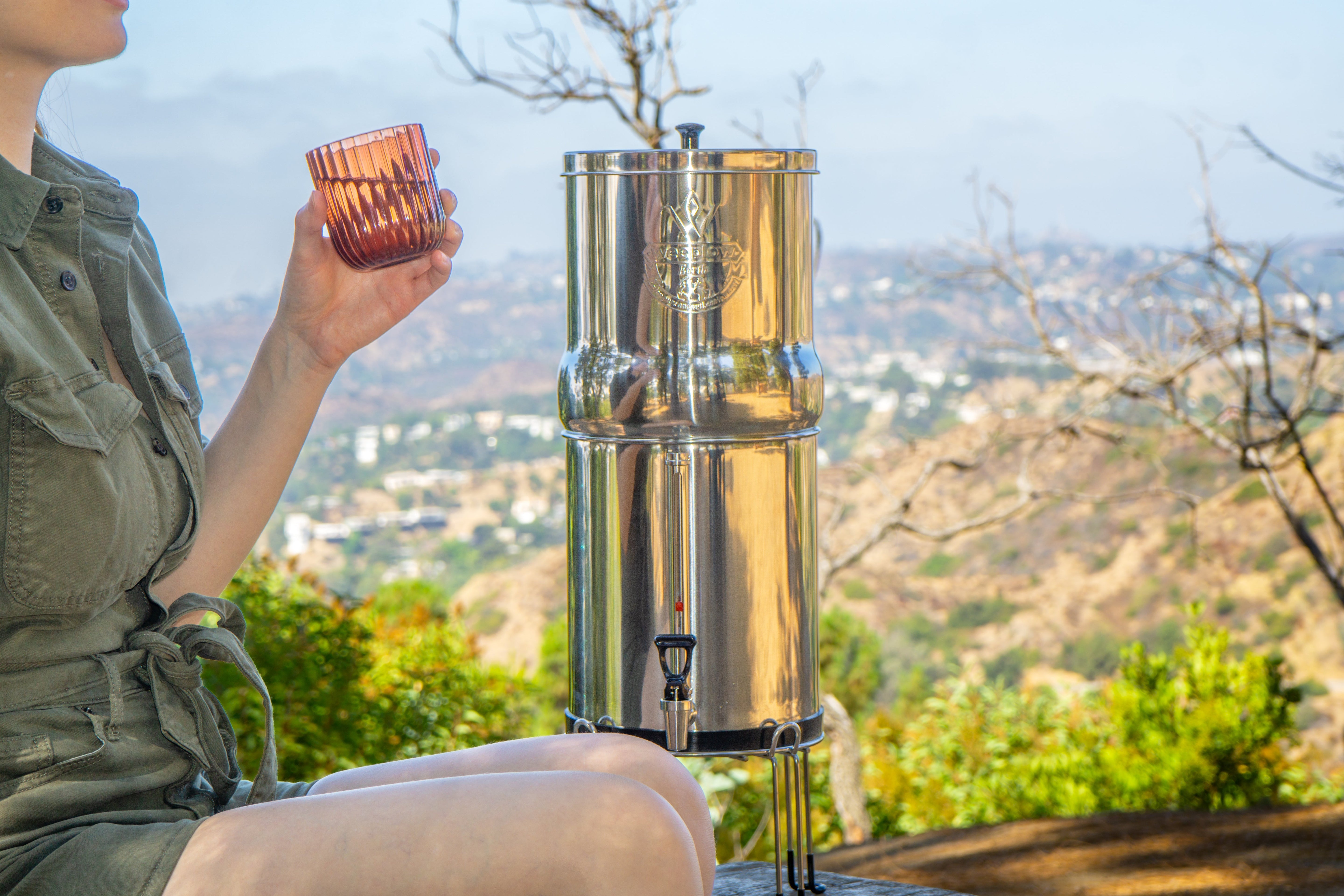
Tap water contains essential minerals for your health, but pollution levels are far too high. PFAS are not the only substances detected, as other dangerous contaminants such as heavy metals may also be present. The best solution is to use a gravity filter. Combined with an activated carbon filter, it can reduce the presence of these chemical substances by 99%.
In less than 5 minutes, your setup will be ready and able to purify tap water, river water and non-potable water, which is not the case with a simple filter jug.
Nitrates et méthémoglobinémie : quels risques pour l’eau du robinet ? Comprenez le lien entre ces deux éléments et ce que cela signifie pour votre eau au quotidien.
Researchers are increasingly studying the possible effects of chronic exposure to nitrates in drinking water. Here is what current research actually says about the potential risks associated with l...
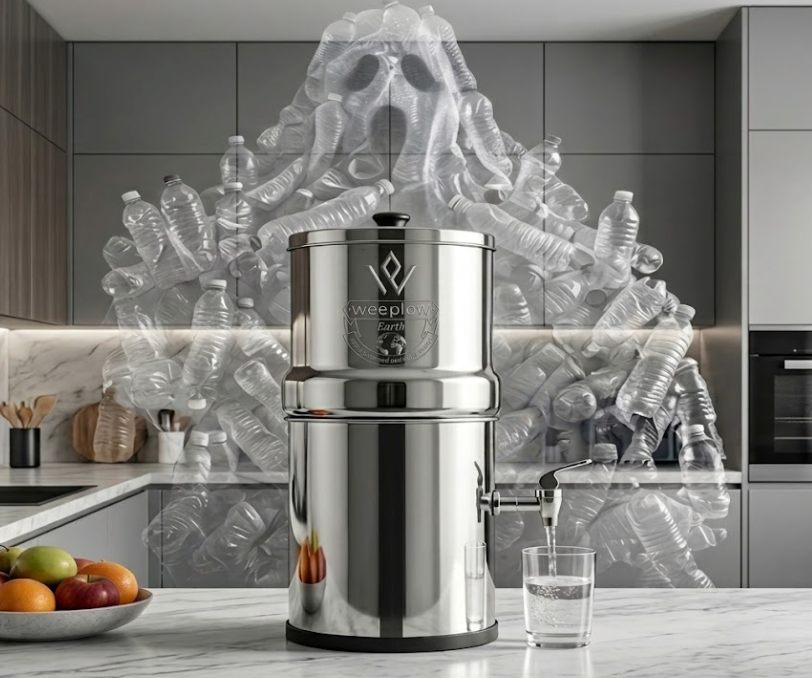
Introduction Each year, a French household spends hundreds of euros on bottled water. It is carried home from the supermarket, stored in the kitchen, reassured by the image of mountains on ...
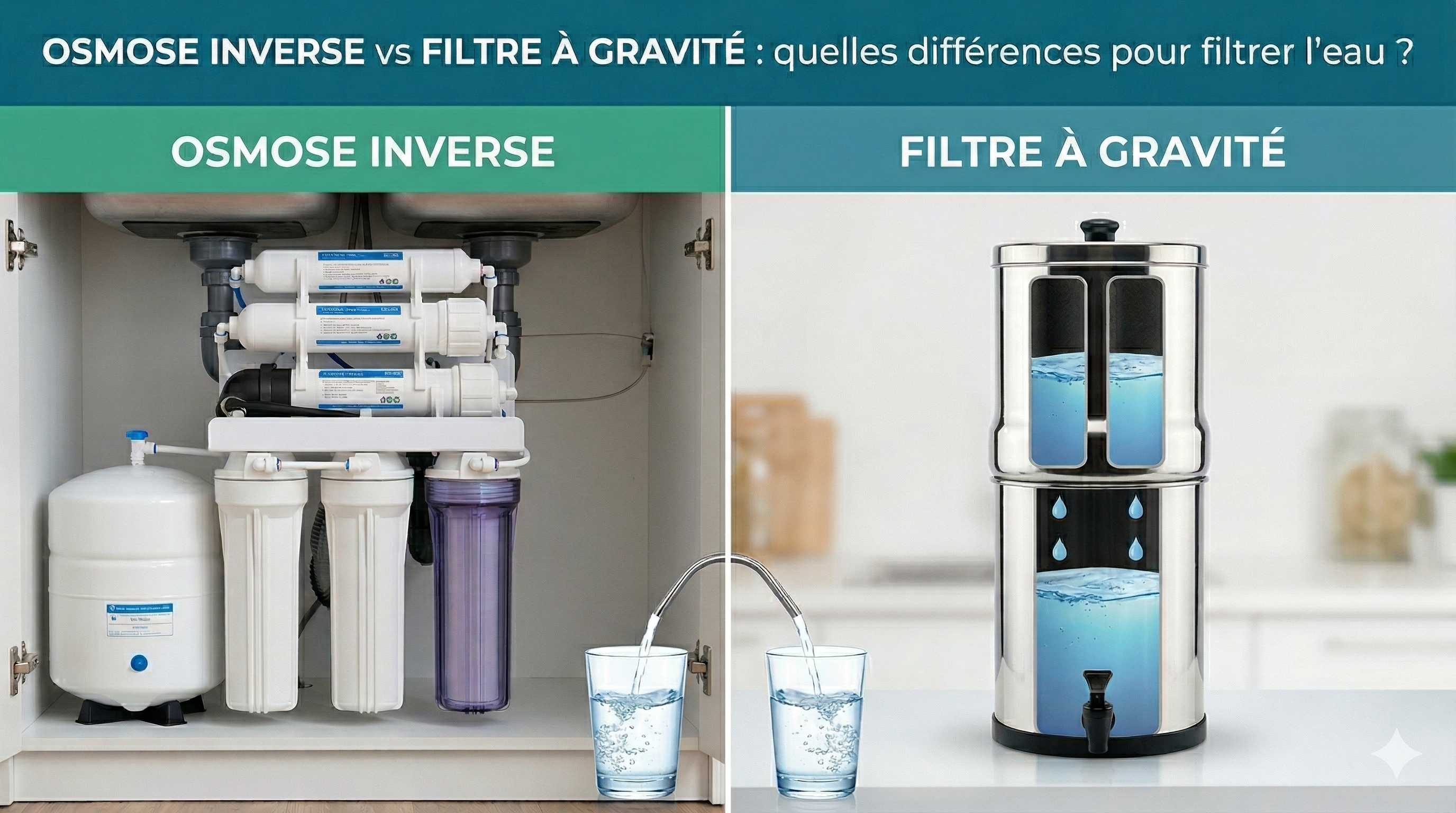
Reverse osmosis or a gravity filter: what are the differences when filtering drinking water? Discover how these two technologies work, along with their advantages and limitations for reducing conta...
Tap water is often treated to make it drinkable, but it can still contain traces of pollutants. These may include chlorine, pesticides, nitrates and pharmaceutical residues. These substances can ca...